Top Integration Options for Purchase Order Management Software

If you’re looking to streamline your business’s procurement process, purchase order management software is a must-have. However, the software doesn’t operate in a vacuum; it needs to integrate with other systems in your business to function effectively. In this article, we’ll explore the top five integration options for purchase order management software and help you make the best decision for your company.

Understanding Purchase Order Management Software

Purchase order management software is a tool that streamlines the procurement process by automating tasks such as creating purchase orders, managing vendor information, and tracking expenses. With purchase order management software, businesses can increase efficiency, reduce errors, and gain visibility into their procurement process.

What is Purchase Order Management Software?

Purchase order management software is a specialized tool that helps businesses manage the procurement process more effectively. The software automates many of the manual tasks involved in procurement, allowing companies to save time, reduce errors, and streamline their operations.

For businesses that deal with a large number of purchase orders on a regular basis, purchase order management software can be a game-changer. The software can help businesses keep track of all their purchase orders, from creation to delivery, and ensure that the process runs smoothly.

One of the key features of purchase order management software is the ability to automate the creation of purchase orders. This can save businesses a significant amount of time, as they no longer need to manually create purchase orders for each transaction.

In addition to automating the creation of purchase orders, purchase order management software can also help businesses manage vendor information. The software can store information such as contact details, pricing agreements, and delivery schedules, making it easy for businesses to keep track of their vendors and ensure that they are meeting their obligations.

Benefits of Using Purchase Order Management Software

The benefits of using purchase order management software are numerous. Businesses can improve their efficiency, reduce errors, and gain a better understanding of their procurement process. By using purchase order management software, businesses can:

  • Reduce maverick spend

Maverick spend refers to purchases made outside of the normal procurement process. This can happen when employees make purchases without going through the proper channels, or when there is a lack of visibility into the procurement process. Purchase order management software can help reduce maverick spend by providing a clear and structured procurement process that employees can follow.

  • Improve supplier relationships

By using purchase order management software, businesses can better manage their relationships with suppliers. The software can help keep track of pricing agreements, delivery schedules, and other important information, making it easier to communicate with suppliers and ensure that they are meeting their obligations.

  • Optimize procurement processes

Purchase order management software can help businesses optimize their procurement processes by providing real-time visibility into the status of purchase orders. This can help businesses identify bottlenecks and areas for improvement, allowing them to make changes that will increase efficiency and reduce costs.

  • Ensure compliance with regulations and policies

Many businesses are subject to regulations and policies that govern their procurement processes. Purchase order management software can help ensure compliance with these regulations by providing a clear and structured procurement process that meets all the necessary requirements.

Overall, purchase order management software is a valuable tool for businesses that want to streamline their procurement process and improve their efficiency. By automating many of the manual tasks involved in procurement, businesses can save time, reduce errors, and gain a better understanding of their procurement process.

Factors to Consider When Choosing Integration Options

When choosing an integration option for your purchase order management software, there are several factors that you should consider, including:

Compatibility with Existing Systems

One of the essential factors to consider when choosing an integration option is compatibility with your existing systems. Your purchase order management software needs to work with your current systems to be effective. If your systems are outdated or incompatible, you may need to upgrade your systems before integrating your purchase order management software.

For example, if you are using an older version of an accounting software that is not compatible with the latest purchase order management software, you will need to upgrade your accounting software to ensure compatibility.

It is also important to ensure that your existing systems can handle the integration. For example, if you are using a cloud-based system, you need to ensure that the integration option you choose is also cloud-based.

Scalability and Flexibility

Your business is likely to grow, and you need an integration option that can grow with you. Look for an integration option that is scalable and flexible, as this will help you keep pace with your business’s growth.

For example, if you plan to expand your business to new markets, you need an integration option that can handle multiple currencies and languages.

Scalability and flexibility are also essential if you plan to add new features to your purchase order management software. You want an integration option that can accommodate these new features without requiring significant changes to your existing systems.

Ease of Integration

Another critical factor to consider when choosing an integration option for your purchase order management system is ease of integration. You want an integration option that is easy to set up and use as this will save you time and money.

For example, if you are not tech-savvy, you may want to choose an integration option that offers a user-friendly interface and requires minimal coding.

It is also important to consider the level of support provided by the integration option. Look for an option that offers comprehensive documentation, tutorials, and technical support to help you with the integration process.

Cost and ROI

Finally, you need to consider the cost and return on investment (ROI) of the integration option. Look for an option that offers the best value for money and aligns with your business’s overall goals.

Consider the upfront costs of the integration option, such as licensing fees and implementation costs, as well as ongoing costs such as maintenance and support fees.

It is also important to consider the potential ROI of the integration option. Look for an option that can help you streamline your purchase order management process, reduce errors and delays, and improve efficiency.

Ultimately, the integration option you choose should align with your business’s overall goals and help you achieve your objectives.

Integration Option 1: Enterprise Resource Planning (ERP) Systems

Enterprise Resource Planning (ERP) systems are a popular integration option for purchase order management software. These systems are designed to manage enterprise-wide resources, including financials, human resources, and supply chain management. With the integration of purchase order management software, ERP systems become even more powerful tools for businesses.

Overview of ERP Integration

ERP integration involves integrating your purchase order management software with your ERP system. This process allows you to streamline your procurement process by automating tasks and improving visibility. With the integration, you can easily manage your purchase orders, track inventory levels, and monitor supplier performance.

One of the key benefits of ERP integration is the ability to have a single source of data and reporting. This means that all of your procurement data is stored in one place, making it easier to analyze and make informed decisions. Additionally, the integration creates a more streamlined procurement process, which results in faster order fulfillment and improved supplier relationships.

Pros and Cons of ERP Integration

Before deciding to integrate your purchase order management software with your ERP system, it’s important to consider the pros and cons:

  • Pros:
    • Single source of data and reporting
    • Streamlined procurement process
    • Improved visibility into the procurement process
    • Greater efficiency and reduced errors
    • Increased automation for routine tasks
    • Better control over inventory levels
  • Cons:
    • Complex integration process
    • Significant upfront cost
    • May require upgrading existing systems
    • Requires ongoing maintenance and support
    • May require additional training for employees
    • Possible disruption to business operations during implementation

Best Practices for ERP Integration

To ensure successful ERP integration, you should follow these best practices:

  1. Thoroughly evaluate your ERP system and purchase order management software to ensure compatibility. Not all systems are created equal, and it’s important to make sure that your software can integrate seamlessly with your ERP system.
  2. Develop a clear integration plan and timeline. This should include a detailed project plan, milestones, and deadlines for each phase of the integration process.
  3. Conduct thorough testing of the integration process before going live. This will help identify any issues or bugs that need to be addressed before the system goes live.
  4. Train employees on the new system and processes. This is critical to ensure that everyone understands how to use the new system and can take advantage of its full capabilities.
  5. Establish ongoing maintenance and support. ERP integration is not a one-time event. It requires ongoing maintenance and support to ensure that the system continues to function properly and meets your business needs.

By following these best practices, you can ensure that your ERP integration is a success and that your business can take full advantage of the benefits it offers.

Integration Option 2: Customer Relationship Management (CRM) Systems

Customer Relationship Management (CRM) systems are another popular integration option for purchase order management software. CRM systems are designed to manage customer interactions and relationships, including sales, marketing, and customer service.

Overview of CRM Integration

CRM integration involves integrating your purchase order management software with your CRM system. This process allows you to manage your procurement process more effectively by improving communication and visibility between departments.

Pros and Cons of CRM Integration

There are several pros and cons to integrating your purchase order management software with your CRM system:

  • Pros:
    • Improved communication and collaboration between departments
    • Increased visibility into the procurement process
    • Reduced manual data entry
    • Improved customer service
  • Cons:
    • May require significant customization
    • May require additional training for employees
    • May require re-structuring of business processes

Best Practices for CRM Integration

To ensure successful CRM integration, you should follow these best practices:

  1. Evaluate your CRM system and purchase order management software to ensure compatibility
  2. Develop a clear integration plan and timeline
  3. Conduct thorough testing of the integration process before going live
  4. Train employees on the new system and processes

Conclusion

Choosing the right integration option for your purchase order management software is essential for streamlining your procurement process and achieving business success. When evaluating integration options, consider the factors such as compatibility, scalability, ease of integration, and cost. ERP and CRM systems are popular integration options, each with their pros and cons and best practices. Ultimately, the integration option you choose will depend on your business needs and goals. But no matter which option you choose, proper planning, testing, and training will help ensure successful integration and a more efficient procurement process.

Still not sure which integration will be right for your unique process? Get in touch with our procurement experts to get a free demo and find the right solution that works for you.


source https://www.bellwethercorp.com/blog/top-integration-options-for-purchase-order-management-software/

How to Audit Your Suppliers [eBook]

How do you pick a new supplier? The one who offers the lowest cost? The one who guarantees quality? Or maybe a mix of both – which is great but sadly, not enough to determine if a supplier would be the right fit for your needs.

And it’s not just about picking a new supplier either. If you already have multiple suppliers, how do you measure which ones are going good and which ones are falling behind expectations?

While some large organizations have a dedicated structure and process in place to annually (or quarterly) audit their suppliers, most organizations run on as-need basis simply because they don’t want to invest the time and energy those audits take.

For that reason, we bring to you this simple checklist that you can use to quickly audit your suppliers and get a solid grasp on your procurement process.

Fill out the form to instantly get access to the eBook.

//js.hsforms.net/forms/embed/v2.js
hbspt.forms.create({
region: “na1”,
portalId: “2513239”,
formId: “6afc3e32-85da-4f57-9208-89fbbd619c3f”
});

source https://www.bellwethercorp.com/blog/how-to-audit-your-suppliers-ebook/

Why Procurement Software is a Valuable Investment for SMBs

In the digital world, it’s surprising to see just how many businesses are still using manual procurement processes. Organizations across the world are still using spreadsheets that are time-consuming, error-prone, expensive and inefficient. The solution to these woes is in the utilization of procurement software.

Is Your Manual Procurement Process Hurting Your Business?

Manual processes are holding businesses back and costing them in a way they often don’t realize.

Lost Hours

Tracking down vendor information in email chains or through multiple spreadsheets, reviewing contracts, and manual sourcing all take a toll on the efficiency of employees and the procurement department as a whole. To solve these issues, organizations can leverage e-procurement software that automates time-consuming tasks and creates a centralized location for purchasing decisions.

Messy Documentation

Too many files and too much paper can result in messy documentation. When contracts are stored in hard copy or PDF, it’s difficult to access the details of the contract, including negotiated terms and conditions. The result is far too much time spent looking for documents, or the info and details within those documents.

Investing in procurement software solutions means no more hard copies and no more PDFs of important information. Instead, everything is stored in one place, making it easy to find, exactly when you need it.

Missed Savings Opportunities

When you speed up tasks like creating invoices and vendor selection, you can make faster and more valuable decisions. Automating processes means that your staff can focus their energy on other tasks, such as building beneficial vendor relationships.

No Centralized Location

When you use a manual procurement process, you don’t have a go-to source of data and information. Without this location for information about suppliers, the purchasing department must go through various internal and external sources to find the information they need.

Decentralized tools mean that the staff doesn’t have a whole lot of visibility into the procurement process, which can lead to savings leakage and risk. Often, the details get overlooked, and communication begins to break down between the procurement team and customers or suppliers.

With purchase order software for small businesses, you can more easily store and find information in one easy to use platform.

Inefficiency

When you get down to it, a manual process isn’t efficient. When a part of your business is inefficient, your business itself is not as efficient as it could be. Inefficiency leads to your business losing money. For every simple task that ends up taking tons of time out of your employee’s day, your business is losing money.

You can avoid losing money when you automate the procurement process with online procurement management software that allows anyone involved in the procurement function to easily and quickly find the information they need.

Why Invest In Procurement Software?

Depending on your business needs, investing in procurement software is a big decision. Many businesses believe that manual processes are cheaper, but when it comes down to how much time is being wasted, that assumption just simply isn’t true.

Now that you know the risks of continuing to use a manual, spreadsheet-based procurement process, let’s discuss the advantages of procure to pay software for small businesses.

Eliminate Paper-based Systems

Paper-based systems are time-consuming and can lead to confusion. Purchase order software creates electronic purchase orders with all of the necessary information automatically. Those purchase orders are then accessible in real-time from anywhere when using a smartphone or computer.

Purchasing Based on Your Policies

The automation of a cloud-based procurement solution makes it easy for you to create hierarchies and rule-driven workflows to ensure your purchase orders are accurate and comply with your (and your vendor’s) policies.

Boosts Productivity

With less busywork comes productivity. Task automation requires little to no human intervention and provides routes and alerts for approval workflows, automatic collection, and cross-referencing of transaction data. By boosting productivity, you can free up time for your employees to focus on more important tasks.

Fewer Errors

With a pre-selected vendor list and integrated inventory and contract management, procurement solutions make compliance easier. There will be no more duplicate orders or invisible spend.

Efficiency

Automated procurement platforms boost purchase order processing speed and improving workflows. The purchasing process that may have taken days will now be condensed into just a few hours.

Cost Savings

Streamlining the purchasing process results in significant cost savings. Less time and fewer resources required for procurement mean that you can save money and spend it in other areas of your business.

Actionable Data

Actionable data is stored securely on the cloud for easy analysis. You can quickly gain insights into the potential issues in your workflows, create financial reports and budgets, and even identify areas of potential in your supply chain.

Spend Management

E-procurement solutions structure spend across vendors and provides detailed tracing information. This spend management allows you to track cost reductions continuously and identify gaps.

Integration

Purchase order software integrates with your accounting software to create purchase orders and invoices with just a few clicks of a button.

Bellwether: A Valuable Investment for SMBs

You can harness your business’ potential by using automation to increase the efficiency of your procurement process. By integrating a purchase order system that meets all of your business needs, you can expect higher levels of productivity, efficiency, and a better bottom-line than ever before.

Bellwether’s solutions mean that your procurement department will never drop the ball again, lose valuable paperwork, or get lost in the mess of manual operation. Instead, use the time saved to invest in building relationships that can result in even more cost savings.

Discover exactly how (and how much) Bellwether can save your business money with our new procurement ROI calculator.

Contact us today to learn how automation is the key to the success of your procurement function.

source https://www.bellwethercorp.com/blog/why-procurement-software-is-a-valuable-investment-for-smbs/

How to Choose a Procurement Software

The demand for procurement software has increased since the pandemic as more companies want to save costs and plan for contingencies. Right from small businesses and medium-sized companies to large corporations with a turnover of billions, all organizations want to cater to their needs with maximum efficiency. 

Hence, selecting the right software becomes very important. Choosing the correct software makes your business operations seamless and hassle-free and helps your organization stay ahead of the competition. Let’s have a look at some factors the decision-makers of a company consider before choosing a procurement software. 

Choosing the right procurement software

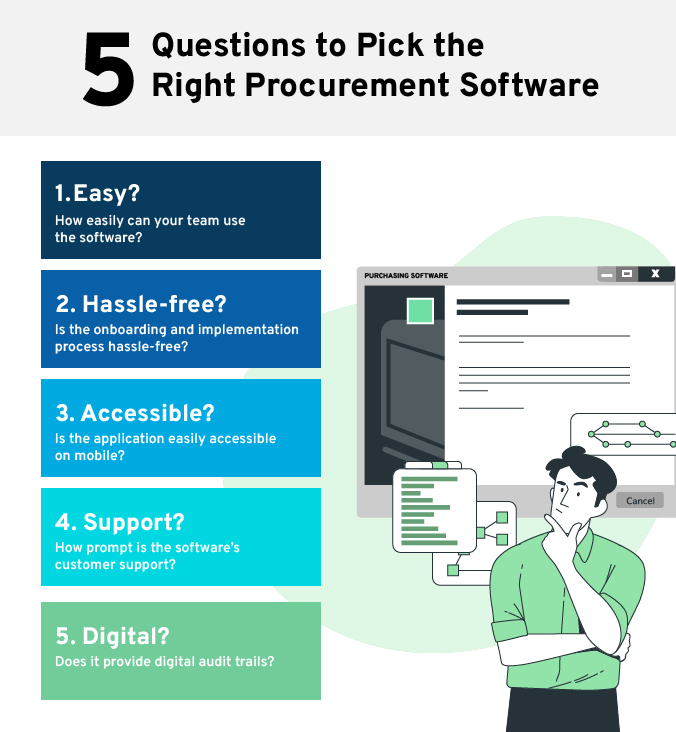
Below are some of the questions your organization can ask which will help in selecting the right software for the business: 

  1. How easily can your team use the software? 

When your company is selecting a procurement software, it is crucial to take note of the ease of use of the software. After all, the employees should be able to transition to digital procurement seamlessly, without any hassles. 

A good way to check if the end-user in your company can use the software with ease is to sign up for a free trial. This way, you can run your company’s procurement processes, check if the reports are working, if the approval flow is user-friendly, etc. 

  1. Is the onboarding and implementation process hassle-free? 

After purchasing the software, you do not want to waste time on complicated onboarding and implementation processes. This can get challenging for the company’s procurement team. Abiding by a complex implementation process is usually not accepted well. 

A digital procurement software should have a quick data onboarding process, little but efficient training time, clear onboarding materials and a user onboarding process, etc. 

  1. Is the application easily accessible on mobile? 

When you are on the go, your purchasing activities should not stop and that is exactly what ‘procurement on the go’ means. A good procurement software will have a mobile app which will enable procurement teams to work remotely without affecting the company’s efficiency and productivity.

An efficient mobile procurement app will let the employees request, approve, and receive goods on the go, will alert the users of pending approvals to speed up the approval process, will let users view budgets and set spending thresholds to control spending limits, etc. – all this on the go. 

How to pick the right procurement software
  1. How prompt is the software’s customer support? 

The most important aspect while selecting a procurement software is customer support. If the software has good customer support, you can rest assured that your issues will be resolved promptly and there will be minimal damage to your procurement activities. 

For example, if the procurement software has a dedicated onboarding team that takes care of the onboarding process and helps out the team 24/7 with it, this means that the customer support is excellent.

  1. Does it provide digital audit trails? 

Finally, the primary objective of a digital procurement software is to provide transparency in a company’s purchasing process. A digital software records and captures the event log history for all your company’s purchasing documents. 

This provides you with digital audit trails which can help your organization in future internal or external audits or tax purposes. A good procurement software should be able to track the approval history of every order and the purchase made, every edit that was made to the order, etc. 

Conclusion

There are numerous digital procurement software which are available and can be easily used by a company at any given time. However, it is important to first – understand the kind of business your organization is conducting and then choose the software as per the requirements of the business. 

Now, if you have already shortlisted a few solutions, use our exhaustive buyer’s checklist to make a head-to-head comparison and find the best one suited for you.


source https://www.bellwethercorp.com/blog/how-to-choose-a-procurement-software/

21 Procurement Terms You Must Know [Infographgic]

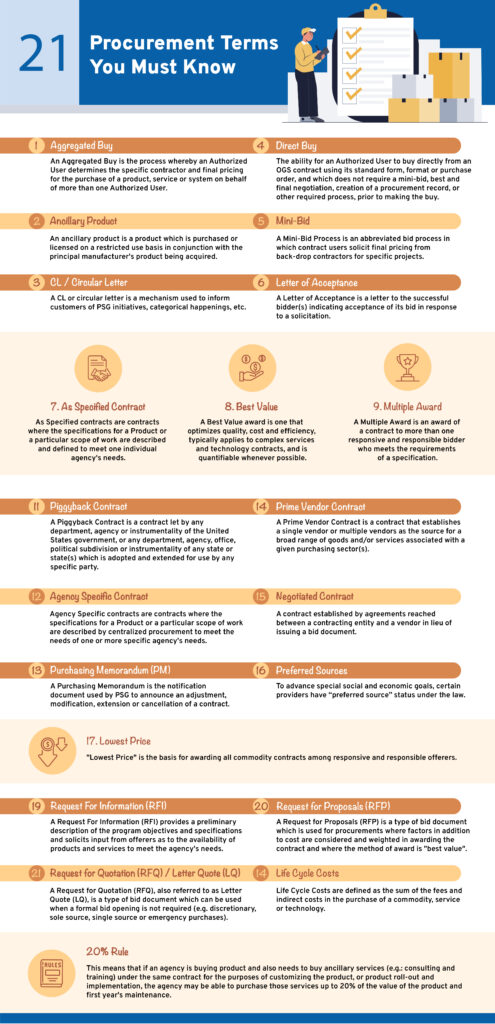
Not many people realize that most of the procurement-related documents like POs, RFQs, and others are in fact legally binding. And for that reason, they are written in a formal manner using specific terms.

Take a quick glance at any such document and you’ll come across many such terms that sound like boilerplate but actually carry specific meaning. So if you wish to excel in your job as a purchasing manager or supply chain manager, it is important that you understand the exact meaning of those terms along with their intricacies.

Let’s take a closer look at 21 of such commonly used procurement terms:


Hope this infographic cleared many of your doubts about these terms and will make you more informed about the procurement documents. Feel free to share this infographic with your team to ensure everyone is aware of these specifics.

source https://www.bellwethercorp.com/blog/21-procurement-terms-you-must-know-infographgic/

Purchasing vs. Procurement: What’s the Difference [Infographgic]

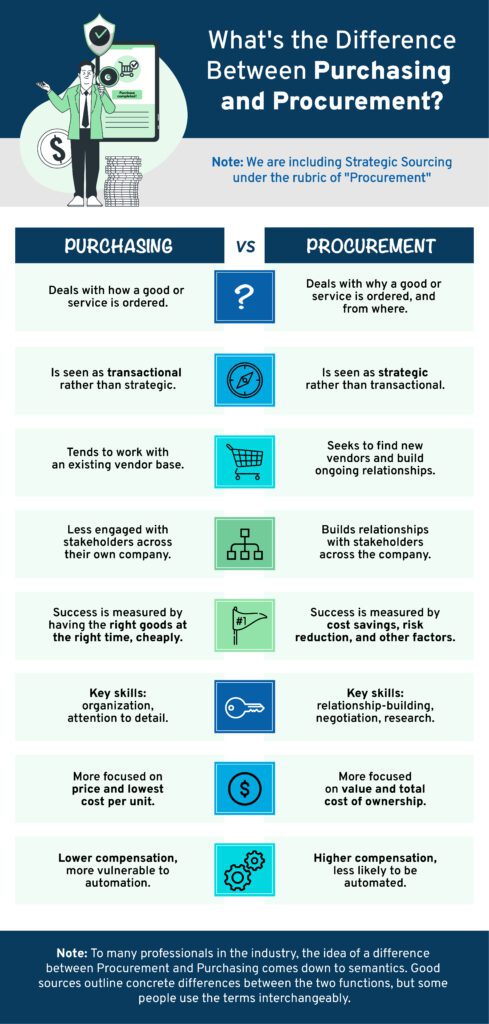
Purchasing and Procurement are terms often used interchangeably by many. And while both do encompass similar functions, they are obviously not the same. And since these terms are mostly used in documents and strategy meetings, there is always a chance of miscommunication.

For example, CFOs and supply chain managers are mostly geared towards procurement strategies while purchasing managers devise their own purchasing tactics. But if these terms are used interchangeably in documents, there is bound to be some overlap and confusion regarding specific functions.

To clear that confusion, here’s a short infographic making clear distinction between purchasing and procurement:

Purchasing vs. Procurement

To put it in a nutshell, procurement is the overarching function within which purchasing operates. So it’s better to use these terms in their specific context. And feel free to share this infographic with your team to ensure the communication remains clear and consistent.

source https://www.bellwethercorp.com/blog/purchasing-vs-procurement-whats-the-difference-infographgic/

A Starter Guide For New Purchasing Managers [eBook]

The role of purchasing managers lie on a unique tri-junction. Apart from the usual paperwork (as it is generally perceived), they also hold the key to fluent operations and have a direct bearing on the bottom-line.

Be it managing suppliers, inventory, or simply keeping track of all the paperwork like POs and invoices, there is range of functions that a purchasing manager is expected to perform. So if you are just starting out in your new role, where should you begin?

In this eBook, we present a short handbook for new purchasing managers to properly understand their role and hit the ground running.

Fill out the form to instantly get access to the eBook.

//js.hsforms.net/forms/embed/v2.js
hbspt.forms.create({
region: “na1”,
portalId: “2513239”,
formId: “4351b620-4418-41c8-9ddb-581feb3f24a9”
});

source https://www.bellwethercorp.com/blog/a-starter-guide-for-new-purchasing-managers-ebook/

8 Essential Features Your Purchasing Software Must Have [eBook]

A simple Google search will show you that there are hundreds of purchasing software available in the market. From simple free tools to intricate enterprise platforms, there is no shortage of options. For the buyer, however, the question remains ‘which one is the best suited for me?’

Of course, the more expensive options tend to have more features but it is worth considering if are they really worth the investment? Why pay for a feature that you’ll probably never use?

In this eBook, we list out 8 essential features you should look for when choosing a purchasing software to ensure not only you get the right software but also the most bang for your buck.

Fill out the form to instantly get access to the eBook.

//js.hsforms.net/forms/embed/v2.js
hbspt.forms.create({
region: “na1”,
portalId: “2513239”,
formId: “eb198da3-71e9-4f25-9eae-19dba9148021”
});

source https://www.bellwethercorp.com/blog/8-essential-features-your-purchasing-software-must-have-ebook/

8 Essential Features Your Purchasing Software Must Have [eBook]

A simple Google search will show you that there are hundreds of purchasing software available in the market. From simple free tools to intricate enterprise platforms, there is no shortage of options. For the buyer, however, the question remains ‘which one is the best suited for me?’

Of course, the more expensive options tend to have more features but it is worth considering if are they really worth the investment? Why pay for a feature that you’ll probably never use?

In this eBook, we list out 8 essential features you should look for when choosing a purchasing software to ensure not only you get the right software but also the most bang for your buck.

Fill out the form to instantly get access to the eBook.

//js.hsforms.net/forms/embed/v2.js
hbspt.forms.create({
region: “na1”,
portalId: “2513239”,
formId: “eb198da3-71e9-4f25-9eae-19dba9148021”
});

source https://www.bellwethercorp.com/blog/8-essential-features-your-purchasing-software-must-have-ebook/

Benefits of a Procure to Pay (P2P) System

The procure-to-pay process is efficient because of the adoption of the latest technologies in procurement. The primary goal of most technology in procurement is creating value and efficiency in the entire lifecycle of purchasing activity. 

Procurement is one of the most crucial components of an organization irrespective of the size of the organization. Under procurement, there are various other functions like contract management, supplier relationships, supply chain sourcing, and management, among others. Because of this, it is essential that the entire P2P system is digitalized and the benefits of it are realized much sooner than later. Here are some benefits of a Procure to Pay (P2P) system

Benefits of a Procure to Pay (P2P) System

The benefits of a P2P system will be better realized when your company automates the entire purchase-to-pay process. When your organization implements an eProcurement solution, you will see that your procurement teams will find more time on their hands to do cost-effective essential tasks. 

An automated P2P system will also help your company improve spend management along with supply chain management. Let’s have a look at some positive changes your company can expect from a P2P system.

  1. Provides better visibility and transparency

A procure-to-pay solution ensures transparency and visibility throughout your organization’s supply chain. The buyer and the vendor can both view the status of the invoice, payment terms, etc. in real-time. When your business has a transparent P2P process, you can minimize and prevent the duplication of records. 

  1. Efficient data management for better decision-making

Efficient and robust P2P systems offer real-time reporting and analytics which help in tracking crucial spending in your company. You can use real-time and historical data to pull up reports which will help your organization gain better control of the cash flow situation and working capital. This will increase the overall efficiency of spend tracking of your business. 

  1. Drastically lowers invoice processing costs 

After implementing an automated procure-to-pay system, your company will benefit in various ways but most importantly, you will save on costs. Since your company has gone paperless because of the P2P system, it will save you immense time and cost. 

This will allow your employees to work on more strategic tasks rather than doing repetitive manual invoicing tasks – which are now better accomplished by automation. 

  1. Better negotiating power

Suppliers have access to all the information they need about the buyer and the company they are doing business with. This transparency is provided by the automated P2P system your organization is using. When suppliers are sure of when they will be receiving payments, they might be willing to offer a good deal to the buyers. They might be more open to negotiating as they are also likely to gain revenues from a good deal. 

  1. Improvement in supplier relationships 

A good P2P system comes with a supplier portal that is efficient and easy to use. With such a portal, suppliers can exactly know when they can expect payment and this enables them to make prudent business decisions. A systematic supplier portal is also helpful to the buyers as they gain greater visibility into suppliers’ invoices, etc. 

  1. Faster resolution of smaller, otherwise unresolved tasks

With an automated P2P system, your company’s procurement team can spend more time doing functions that add strategic value. This frees up more time and employees can spend this time resolving other pending tasks. 

  1. Finally, streamlines procurement processes

The procure-to-pay system, when automated, makes everything transparent and cost-effective in your organization. The entire procurement cycle, right from creating a requisition to selecting suppliers, to making payments and logging invoices – everything is tracked and recorded under one system. Approvals happen faster and POs are sent electronically to the suppliers seamlessly. The entire P2P process is streamlined because of automated software. 

Conclusion

To conclude, it will be a smart decision if your company decides to invest in a P2P system that is automated. This will guarantee your organization transparency, better spend tracking, a string audit trail, and a seamless purchasing process

Investing in procure-to-pay technology guarantees optimized efficiencies while improving the overall performance of your procurement teams. This will generate better profits for your company and also give you better insights about your suppliers. 

With Bellwether’s software, you can realize all of the above benefits and take your organization’s purchasing game to the next level.


source https://www.bellwethercorp.com/blog/benefits-of-a-procure-to-pay-p2p-system/